

Minister Taminskas attends Transport, Telecommunications and Energy Council in Luxembourg
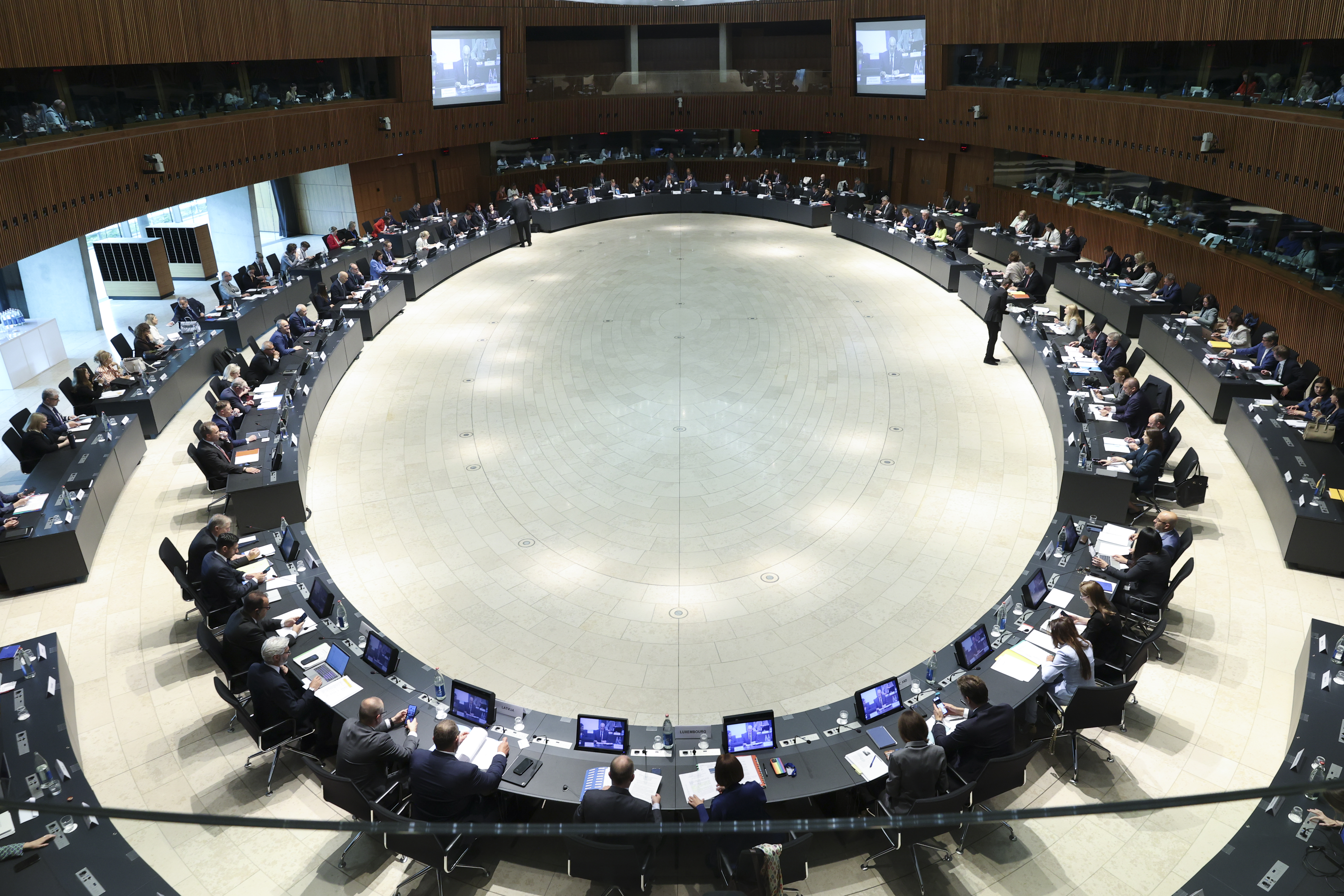
Juras Taminskas, Lithuanian Minister of Transport and Communications, is attending the EU Transport, Telecommunications and Energy Council in Luxembourg on 8–9 June, focusing on strengthening security in the EU’s eastern border regions and enhancing transport sector resilience. He is also holding discussions with his EU counterparts on the possibility of ending seasonal clock changes.
“Hybrid threats have been on the rise, including drone-related incidents and persistent GPS interference originating from Russia and Belarus, which affects navigation in the maritime and aviation sectors. Their impact is felt first and foremost by citizens and the civilian transport sector. Minister Taminskas will therefore raise these issues and seek solutions to strengthen our security, including discussions with EU counterparts on investments in drone detection and counter-drone systems,” said the Minister’s spokesperson, Lukas Paškevičius.
Transport ministers are also focusing on the new EU Ports Strategy and Industrial Maritime Strategy to safeguard and strengthen these sectors in the EU, as well as on the security of road, rail and other critical infrastructure and its adjustment to support military mobility needs. Discussions also cover transport sector competitiveness, decarbonisation efforts and the deployment of the European Rail Traffic Management System (ERTMS).
The end of seasonal clock changes is on the agenda
Bilateral meetings with Sweden’s Minister for Infrastructure, Andreas Carlson, and France’s Minister for Transport, Philippe Tabarot, are also planned in Luxembourg. These discussions will address the possibility of ending seasonal clock changes in the EU. According to Minister Taminskas, the key issue is not whether summer or winter time is applied, but the practice of changing the clock itself.
“The Minister has repeatedly noted that we cannot remain passive observers of a situation that has been a long-standing concern for EU citizens. We have already called on ministers from the Baltic and Nordic countries to put an end to seasonal clock changes. Work is ongoing to reach a common understanding with southern European countries as well,” added Lukas Paškevičius.
Lithuania, Latvia and Estonia agreed in 2018 to discontinue seasonal clock changes. Surveys in Lithuania show that a majority of citizens would prefer permanent summer time.
In a meeting with Baltic and Polish counterparts, the Lithuanian Minister of Transport and Communications will also discuss progress on the Rail Baltica project.
Photo courtesy of the European Union