

Record Investment in Klaipėda: Path Cleared for Southern Port Expansion and Better City Connections
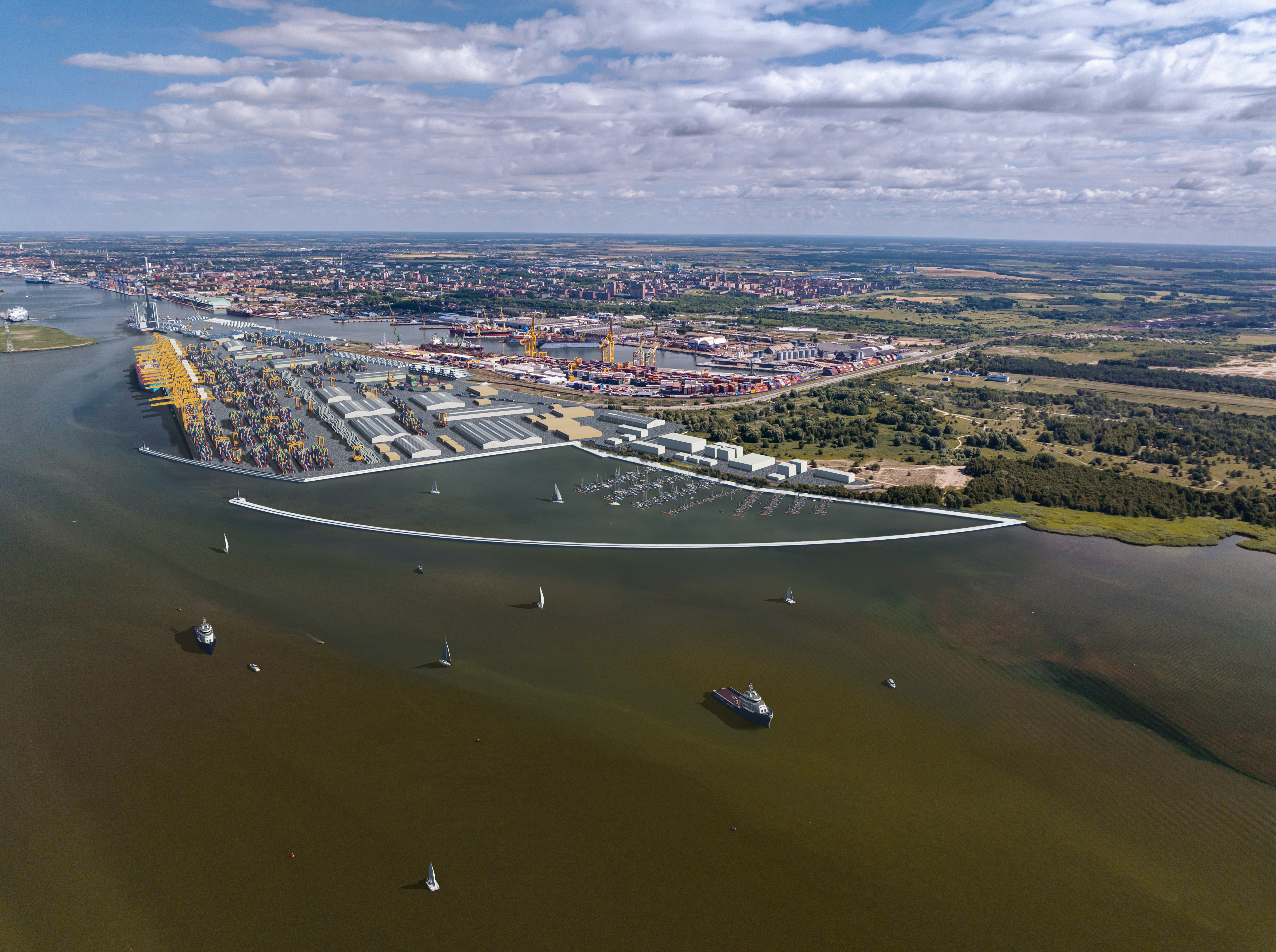
The Lithuanian Parliament (Seimas) has approved legislation on the development of the southern part of Klaipėda State Seaport, paving the way for infrastructure development across approximately 100 hectares of new territory and its use for military mobility needs. The project will strengthen national security and drive economic growth.
“This is one of the largest infrastructure projects in Lithuania in recent decades. If we are to grow, strengthen our competitiveness and accommodate the largest vessels operating in the region, the port must expand. The development of the southern part of the port will significantly expand Lithuania’s potential as a maritime nation. It is equally important that the new port territory is developed alongside the city’s transport infrastructure, creating lasting benefits for both residents and businesses. I am confident that close cooperation between the Government, the Port and the municipality will ensure the smooth implementation of this project,” says Minister of Transport and Communications Juras Taminskas.
The new southern part of the port will be capable of handling up to 30 million tonnes of cargo per year. Over the next 25 years, it could generate around EUR 7 billion in economic benefits, while long-term port revenues are estimated at approximately EUR 1.2 billion over a 50-year period.
“The development of the modern Port of Klaipėda has always been guided by consistent investment, careful planning and a long-term vision. The port’s performance demonstrates that this strategy delivers results and generates value. The development of the southern part of the port, made possible by the newly adopted legislation, will give the Port Authority the opportunity to shape the future of the Port of Klaipėda in a purposeful way by developing infrastructure that will secure the port’s growth, competitiveness and strategic importance to Lithuania for decades to come,” notes Algis Latakas, Director General of Klaipėda State Seaport Authority.
“The expansion of Klaipėda State Seaport is important not only for the city, but for the entire country. However, a growing port must be accompanied by equally significant investment in strategically important transport infrastructure. For decades, we have consistently highlighted the need for a southern bypass. This is a project that would divert heavy goods traffic away from residential areas, reduce noise, air pollution and congestion, improve residents’ quality of life, and strengthen the country’s military mobility.
But the bypass alone is not enough. It is equally important to complete the reconstruction of the Jakai Interchange and upgrade the road towards Šilutė to a four-lane carriageway. Only by delivering all projects will we create an integrated transport system capable of ensuring the efficient operation of the port, convenient connectivity for residents, and the long-term competitiveness of the entire region. “I would like to thank Minister of Transport and Communications Juras Taminskas, whose support has finally helped move these projects from planning to implementation,” underlines Arvydas Vaitkus, Mayor of Klaipėda.
Deputy Minister of Transport and Communications Dovilė Sujetaitė adds that this phase will focus not only on the development of the port, but also on key road infrastructure projects for the city of Klaipėda.
“We are actively working on Klaipėda’s entire logistics network, from the construction of the southern bypass and the modernisation of the Jakai Interchange to the reconstruction of National Road No. 141 Kaunas–Jurbarkas–Šilutė–Klaipėda. These projects will become strategically important links for both the port and the city. Infrastructure development on this scale is a long-term undertaking, and we are ensuring that transport infrastructure grows in step with the port”, says Dovilė Sujetaitė.
A Stronger Port Benefiting Lithuania’s Economy and National Security
The project is regarded as strategically important for both national security and Lithuania’s economy. The legislation will enable the efficient development of port infrastructure, ensure coordination of the project at the national level, and establish a transparent tender process for the lease of the designated port area.
Approximately 100 hectares of new land will be created within the Port of Klaipėda, providing space for cargo handling, logistics, industrial activities, green energy projects and military mobility needs. The project also includes the construction of around 1.3 km of deep-water quays and new southern port gates. The newly created land and all associated port infrastructure will remain state-owned.
The project also includes the development of a southern marina for leisure boating and maritime tourism, with capacity for around 500 vessels. The marina will create modern recreational infrastructure that complements the port’s commercial activities and strengthens its integration with the city.
Port Expansion Set to Attract Private Investment
A mixed financing model is envisaged for the development of the southern part of the port, combining private capital investment, funding from the port operator and other sources. Preliminary estimates indicate that around EUR 600 million will be required to create the new port area and develop the necessary infrastructure, with the investor's initial contribution expected to amount to no less than EUR 300 million. The model will attract private capital at an early stage, with investors helping finance land reclamation and infrastructure development within the port area.
The remainder of the project will be financed through the port operator's own and borrowed funds, as well as other sources. In addition, the development of port superstructure, including buildings, facilities and other operational equipment, could attract a further EUR 800 million in private investment, depending on investors' business decisions. In total, the project could generate around EUR 1.4 billion in public and private investment.
The legislation paves the way for the Port Authority to select an operator that will contribute to infrastructure development through an advance payment and lease the future port area. The Government will also approve the framework for the public tender process.
A contractor has already been selected for the construction of the southern port gates, with the Port Authority signing a contract with Tilsta, the successful bidder. Construction is expected to begin this autumn. The new port area and the necessary infrastructure are scheduled for completion by the end of 2028, with operations starting in 2029. The project will be overseen by a Government-appointed commission.