

Why Russia's attacks on civilian transport matter – and how we will help Ukrainians to keep moving

Like the energy sector, Ukraine's transport infrastructure is under systematic attack, with the aim of destroying the basis of civilised life. Because we cannot allow that to happen, we have created the Ukraine Transport Support Fund.
When a passenger train in Ukraine cannot run, a bus route is suspended, or a bridge is deemed unsafe, the consequences reach far beyond damaged concrete and steel.
For millions of Ukrainians, transport disruptions mean missed medical appointments, longer and more dangerous journeys to work or school, and fewer chances to see family members scattered by war.
As we approach the fifth year of Russia’s full-scale invasion, the constant bombardment of Ukraine’s civilian transport system claims innocent civilian lives and exposes Ukrainians to daily hardship, forcing them to risk their lives simply to travel from one place to another.
More than 4700 attacks
The Russian military has increasingly targeted civilian transport. Ukraine's railways alone suffered more than 4700 strikes since February 2022. The targets ranged from major passenger stations to freight and passenger trains parked in open areas.
Deadly drone attacks on passenger buses have occurred repeatedly across the country, underscoring that civilian transport targets are firmly in the line of fire. On 1 February, an attack on a civilian bus in the Dnipropetrovsk region left 15 travellers dead. Only days earlier, a drone strike on a passenger train on 28 January killed five civilians near Kharkiv.
The damage inflicted on Ukraine's transport systems by Russia extends beyond the human cost. The most recent calculations, now a year old, put Ukraine’s reconstruction and recovery needs at around 75 billion Euros (78 bn US Dollars) for the transport sector alone.
Resilience and ingenuity
Despite their extraordinary resilience and remarkable ingenuity, Ukraine’s transport operators are struggling. Maintaining safe and reliable services under the cumulative weight of the Russian aggression is becoming harder and harder.
During the summer of 2025, rolling stock shortages left thousands without seats as demand on popular rail routes exceeded supply by more than eight to one.
Funding for road safety measures such as lane separation, rest areas, routine inspections, and preventive maintenance has often been postponed or eliminated altogether as wartime budget pressures are forcing difficult trade-offs.
A path forward
Ukraine's transport system keeps people and goods moving, but at a growing cost to safety, efficiency and quality of life.
Travelling has become more difficult and, in many cases, more dangerous than it needs to be. These are not abstract inconveniences; they are constraints on economic activity, social cohesion and human dignity.
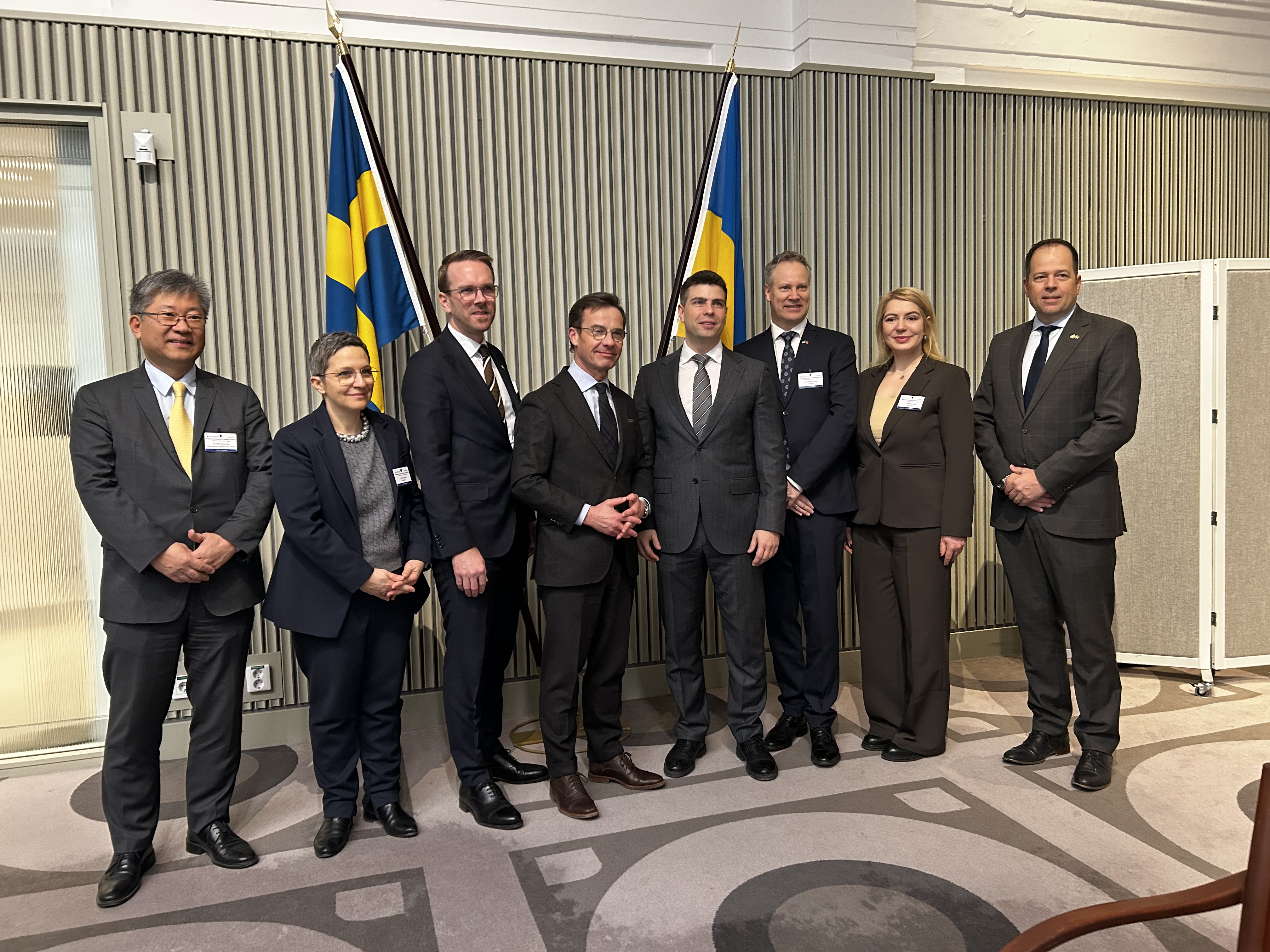
Against this backdrop, a new international initiative offers a path forward. On 4 December 2025, the governments of Canada, Lithuania, Sweden and Ukraine declared their intent to establish the Ukraine Transport Support Fund.
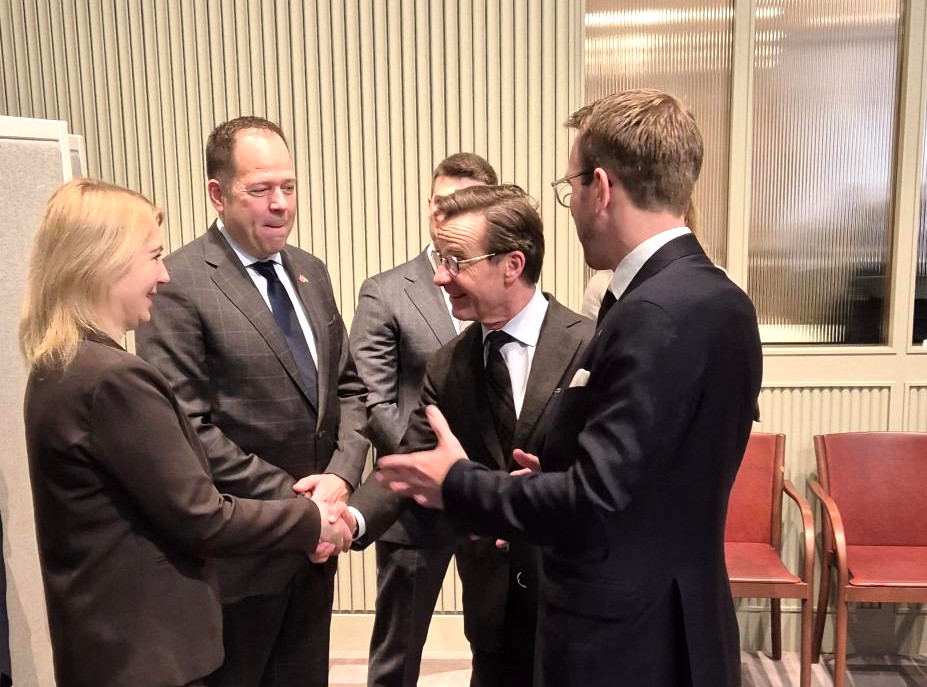
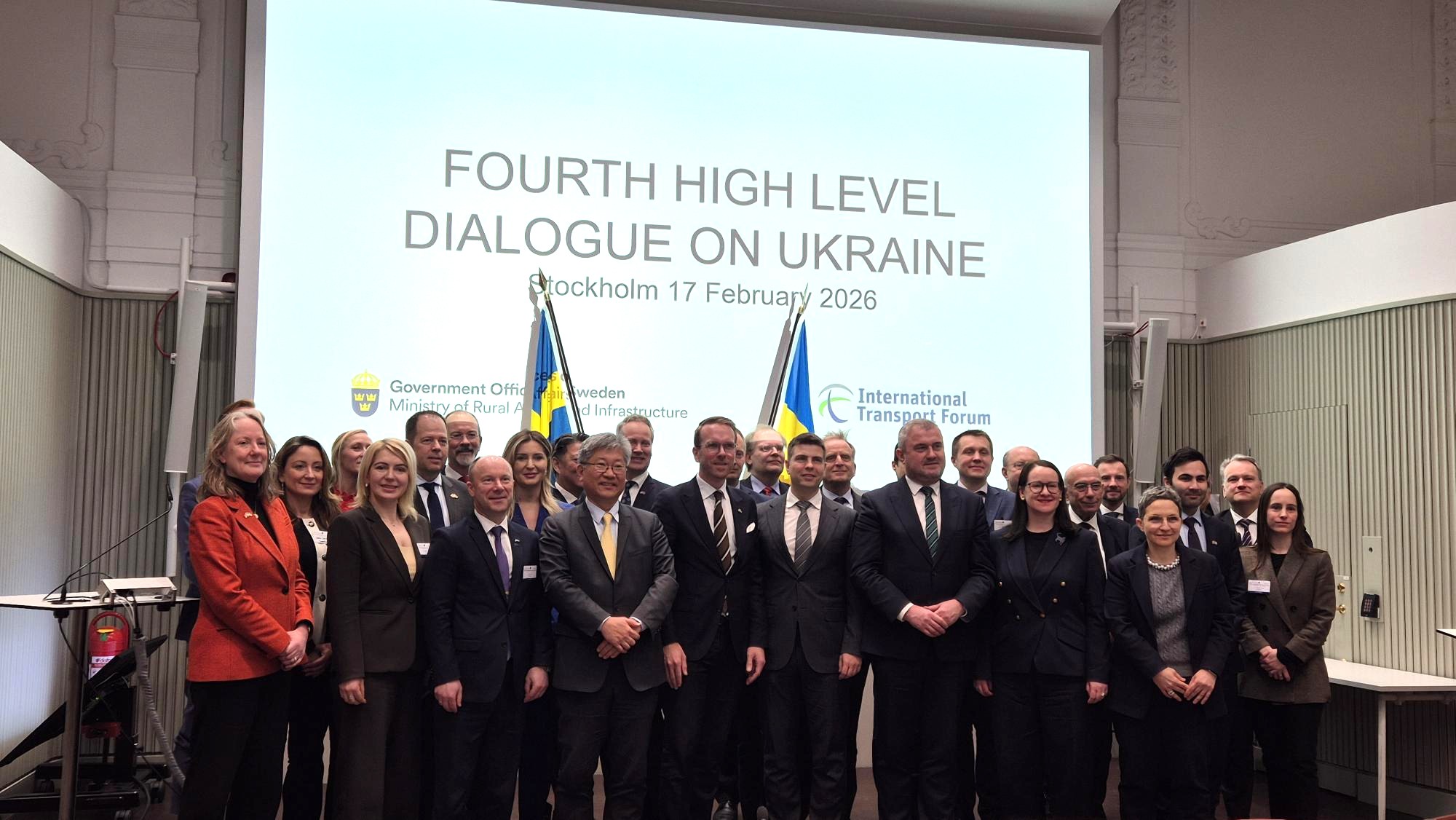
Yesterday (Monday, 16 February 2026), these four governments and a group of like-minded partner countries officially launched the Ukraine Transport Support Fund in Stockholm, just ten weeks after the initial declaration of intent.
The Ukraine Transport Support Fund
The Ukraine Transport Support Fund will serve as a mechanism to channel international funding towards Ukraine’s immediate civilian transport needs. It will be housed within the framework of the International Transport Forum’s Common Interest Group for Transport in Ukraine
Designed to move quickly on small and medium-sized civilian transport projects that often fall outside traditional financing mechanisms, the Ukraine Transport Support Fund will complement the large-scale infrastructure project financing by the World Bank, the European Investment Bank and other international financial institutions.
Small but impactful actions
The Ukraine Transport Support Fund aims to fund small but impactful projects, for example automated weigh stations at border crossings to ease freight bottlenecks; replacing damaged substations that power electric trolley buses; or sensor-based systems to monitor the structural health of bridges and roadways.
The Ukrainian government has already identified several dozen high-impact projects that urgently require funding. These will be the Ukraine Transport Support Fund's initial priorities.
A proven model
The model for the Ukraine Transport Support Fund is proven, drawing inspiration from a similar effort, the Ukraine Energy Support Fund (created by the Energy Community, the mechanism through which the European Union and EU accession candidates co-ordinate energy policy), which has mobilised more than 1.8 billion Euros from donors to support Ukraine’s energy sector.
Like the Energy Community initiative and the Ukraine Demining Coalition, the Ukraine Transport Support Fund will rely on an independent third-party procurement expert to ensure transparency, accountability and compliance with international standards. Lithuania has made available its Central Project Management to support this effort.
A humanitarian and strategic imperative
The immediate task is clear: mobilising donor commitments and translating political will into rapid, targeted support on the ground.
Ukraine’s transport system cannot be fully rebuilt until the war ends. But through the Ukraine Transport Support Fund, international partners can help the besieged country to keep its people moving and goods flowing.
Keeping Ukraine’s transport system up and running is a humanitarian and strategic imperative. The Ukraine Transport Support Fund offers a powerful new mechanism for turning commitment into action and impact.
Andreas Carlson, Minister for Infrastructure and Housing, Sweden, Oleksii Kuleba, Deputy Prime Minister for Restoration of Ukraine - Minister for Development of Communities and Territories of Ukraine, The Hon. Steven MacKinnon, Minister of Transport, Canada, Juras Taminskas, Minister of Transport and Communications, Lithuania.

Last updated: 18-02-2026
Related news:
Klaipėda Port reports growth and expanding Baltic market share
Record Investment in Klaipėda: Path Cleared for Southern Port Expansion and Better City Connections
Preventive Road Safety Campaign at Railroad Crossings
Signalling to Be Installed on Existing Rail Baltica Line to Significantly Improve Safety