

Deputy Minister of Transport and Communications A. Vaiciukevičiūtė: Hydrogen-powered vehicles soon to roll on the streets of Lithuania
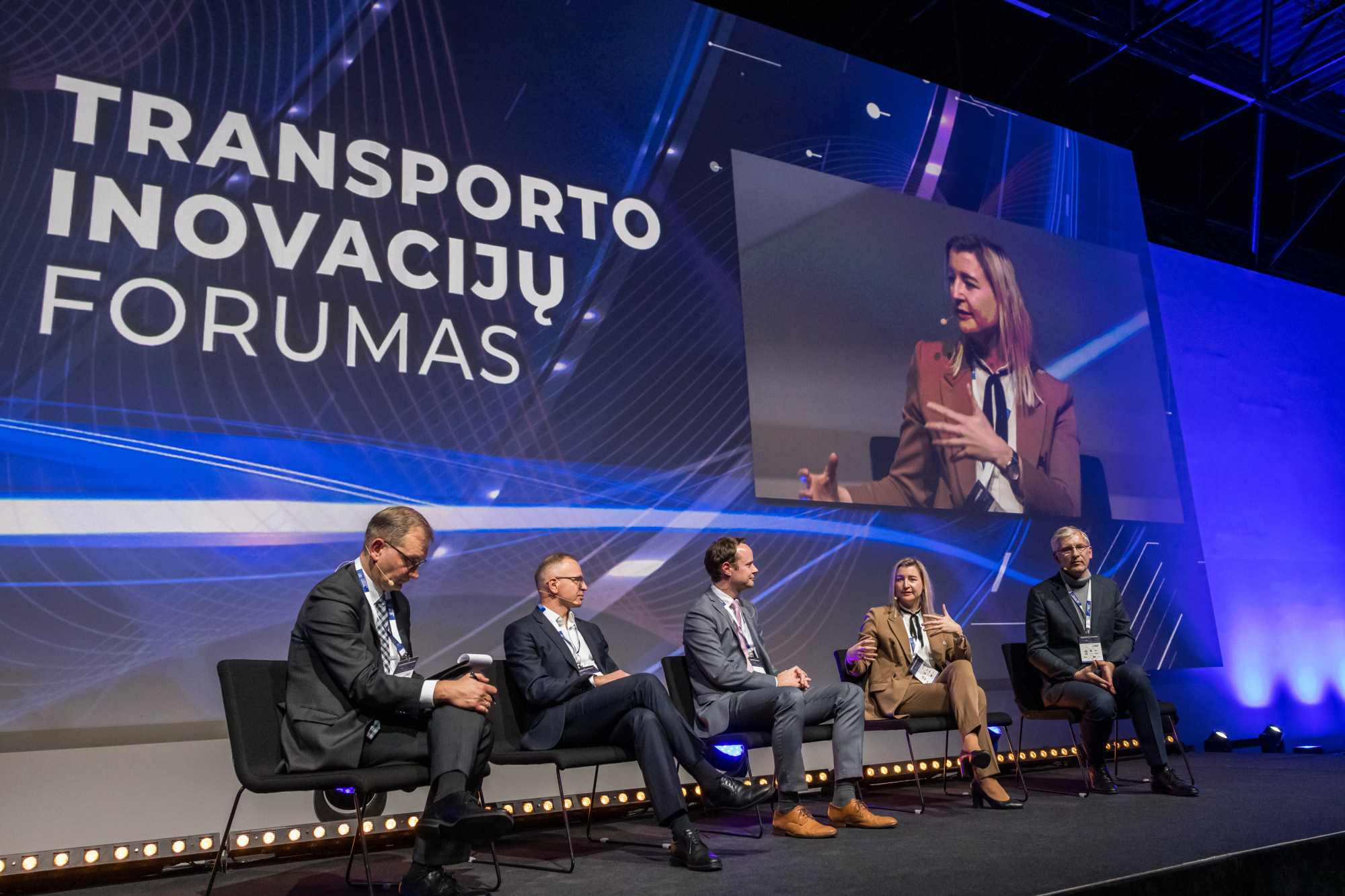
When it comes to accelerating the transition to clean energy, hydrogen is increasingly mentioned among other renewable resources. Hydrogen-powered vehicles are on the rise in Europe, and a test train run has already taken place in Germany. This type of fuel can become a blessing striving to replace natural gas, coal and oil in the industry and transport sectors that are most dependent on fossil fuels – this was emphasised by Deputy Minister of Transport and Communication Agnė Vaiciukevičiūtė at the International Transport Innovation Forum that started on Thursday in Vilnius.
In the discussion held at the Forum: ‘When will the use of hydrogen in the transport sector become commonplace’, Vaiciukevičiūtė exchanged insights with Franz Lehner, Head of the International Cooperation Department at the National Hydrogen and Fuel Cell Technology Organisation in Germany, Martynas Nagevičius, President of the Lithuanian Confederation of Renewable Resources, and Darius Snieška, Regional Manager of Scania Lietuva.
The production of “green” hydrogen is already being carried out rapidly in Europe, with the similar development of the infrastructure of hydrogen stations. There are more than 200 hydrogen filling stations in the countries of the old continent. According to forecasts, they should increase to at least 500 across the continent by 2025.
The development of hydrogen refuelling infrastructure is particularly notable in Western Europe. Automobile manufacturers are also starting to focus on hydrogen-powered vehicles, with a particular focus on those that need to cover long distances, i.e., buses and trucks.
In 2021, more than 2,000 hydrogen-powered vehicles were registered in Europe. There is currently 1 hydrogen-powered passenger car registered in Lithuania, there is no hydrogen refuelling infrastructure, and the nearest filling station is located in Riga. According to the Deputy Minister of Transport and Communications A. Vaiciukevičiūtė, these statistics will be significantly improved in Lithuania in the next few years.
“By 2030, Lithuania plans not only to stimulate the purchase of all types of hydrogen vehicles – passenger cars, buses and trucks – but also to create the necessary hydrogen refuelling infrastructure. Hydrogen-powered vehicles will soon roll on the streets of Lithuania. The goal of the Ministry of Transport and Communications is to install 4 publicly accessible hydrogen filling stations by 2026, the first of which should become available at the end of 2024”, said A. Vaiciukevičiūtė during the discussion of the Transport Innovation Forum.
To ensure the needs of business and society, the installed hydrogen stations should be adapted to passenger and heavy-duty vehicles and public transport, i.e., have the possibility of refilling at 350 and 700 bars.
2.4 million euros have been allocated for financing the installation of stations in Lithuania from the Economic Recovery and Resilience Facility (RRF) funds. The Ministry of Transport and Communications will seek to increase the funding to 3.6 million euros. The call for funding is expected to be published in January 2023, and the financing will be carried out by means of a tendering procedure.
It is expected that by 2030, publicly accessible hydrogen filling stations would be installed on the main roads of the country at least every 150 km, and both passenger and heavy-duty vehicles would be able to use them.
In parallel with the installation of hydrogen stations, the Ministry of Transport and Communications will seek to stimulate the purchase of hydrogen-powered vehicles. Invitations to purchase hydrogen-powered vehicles are expected to be announced in 2023.
The discussion held at the Transport Innovation Forum also highlighted the fact that hydrogen has immense potential: it is also mentioned in the RePowerEU plan published by the European Commission, which aims to reduce the European Union’s dependence on Russian fossil fuels and accelerate the transition to clean energy.