

Minister Taminskas: Greater Investment in the Transport Sector Is Essential to Strengthen EU Security
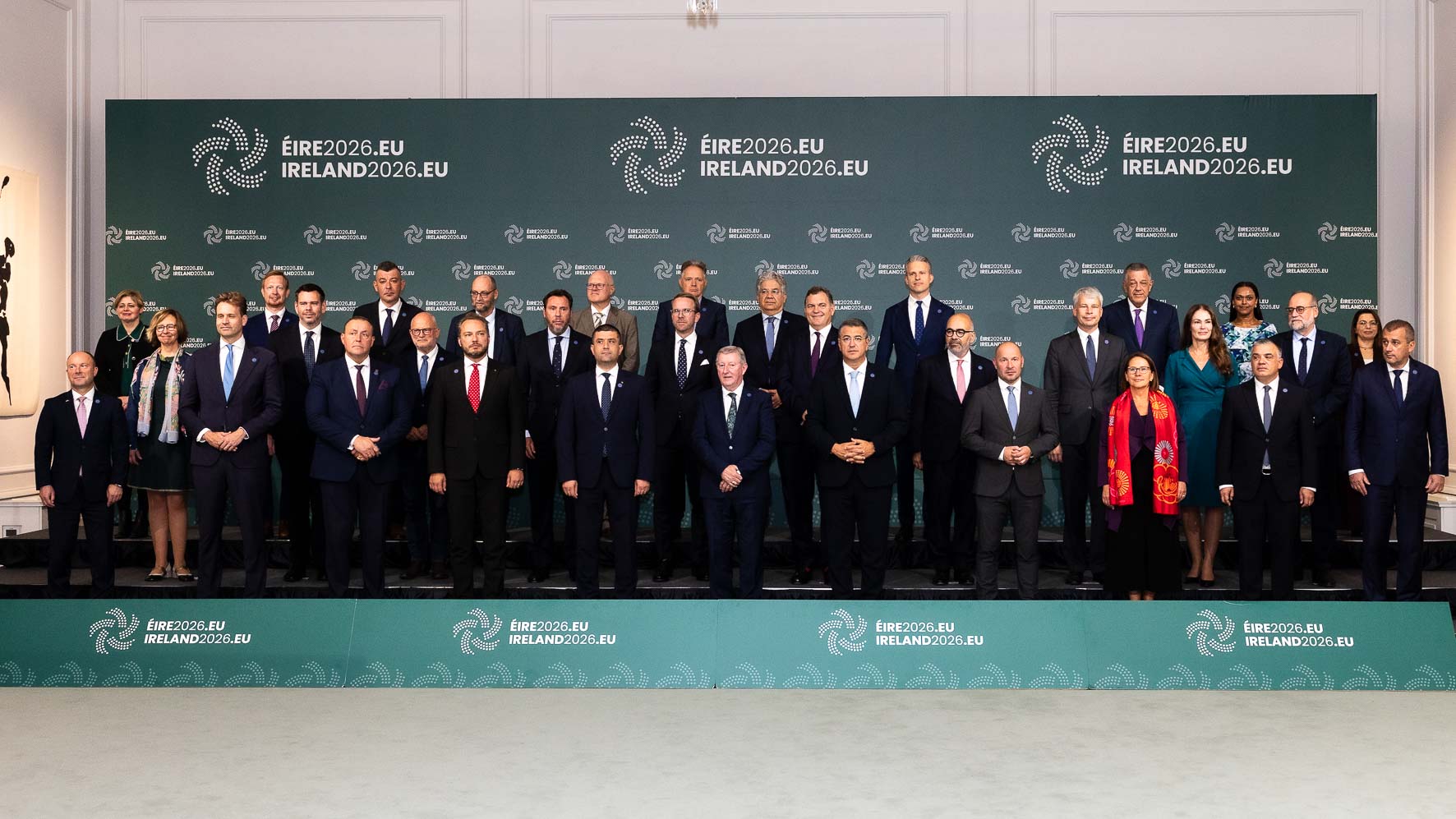
At the informal meeting of European Union (EU) Transport Ministers held in Ireland on Monday, Minister of Transport and Communications of Lithuania Juras Taminskas called for greater investment in transport connectivity and resilience.
The Minister noted that an increasingly complex geopolitical environment and volatility in fuel markets have once again demonstrated the importance of maintaining a transport system capable of withstanding economic challenges.
“Coordinated support and strategic investment are essential to building transport resilience, enhancing competitiveness and preparing for future challenges. For Lithuania, key priorities include strengthening transport links with Europe, accelerating railway electrification, developing alternative fuels infrastructure and ensuring the efficient movement of allied forces. These efforts are vital for regional connectivity and Europe's security,” said Minister Taminskas.
Minister Taminskas highlighted Rail Baltica's strategic importance for regional connectivity and military mobility across the EU's eastern flank. He stressed that continued and flexible EU funding will be essential to the successful delivery of the project under the next Multiannual Financial Framework.
He also emphasised the importance of railway electrification in strengthening the resilience of the transport system. Ongoing projects are expected to increase the share of electrified railways in Lithuania from around 8% to 27%. Upon completion of Rail Baltica, approximately 39% of the country's rail network will be electrified.
Lithuania's Social Climate Plan, approved by the European Commission, foresees approximately €884 million in investments by 2032. Nearly half of this funding will support transport-related measures, including the expansion of electric mobility and charging infrastructure, enhancements to public transport, the introduction of new school buses, the development of cycling infrastructure and a multimodal ticketing system.
Furthermore, under the Government Programme Implementation Plan, Lithuania aims to install 5800 publicly accessible electric vehicle charging points, alongside 4 hydrogen and 22 biomethane refuelling stations by 2028. The plan also seeks to increase the share of newly registered passenger vehicles powered by alternative fuels from 10% to 20%.
The informal meeting of EU Transport Ministers was hosted by Ireland, which currently holds the Presidency of the Council of the EU. Lithuania will assume the Presidency on 1 January 2027.
Photo courtesy of Ireland2026.eu